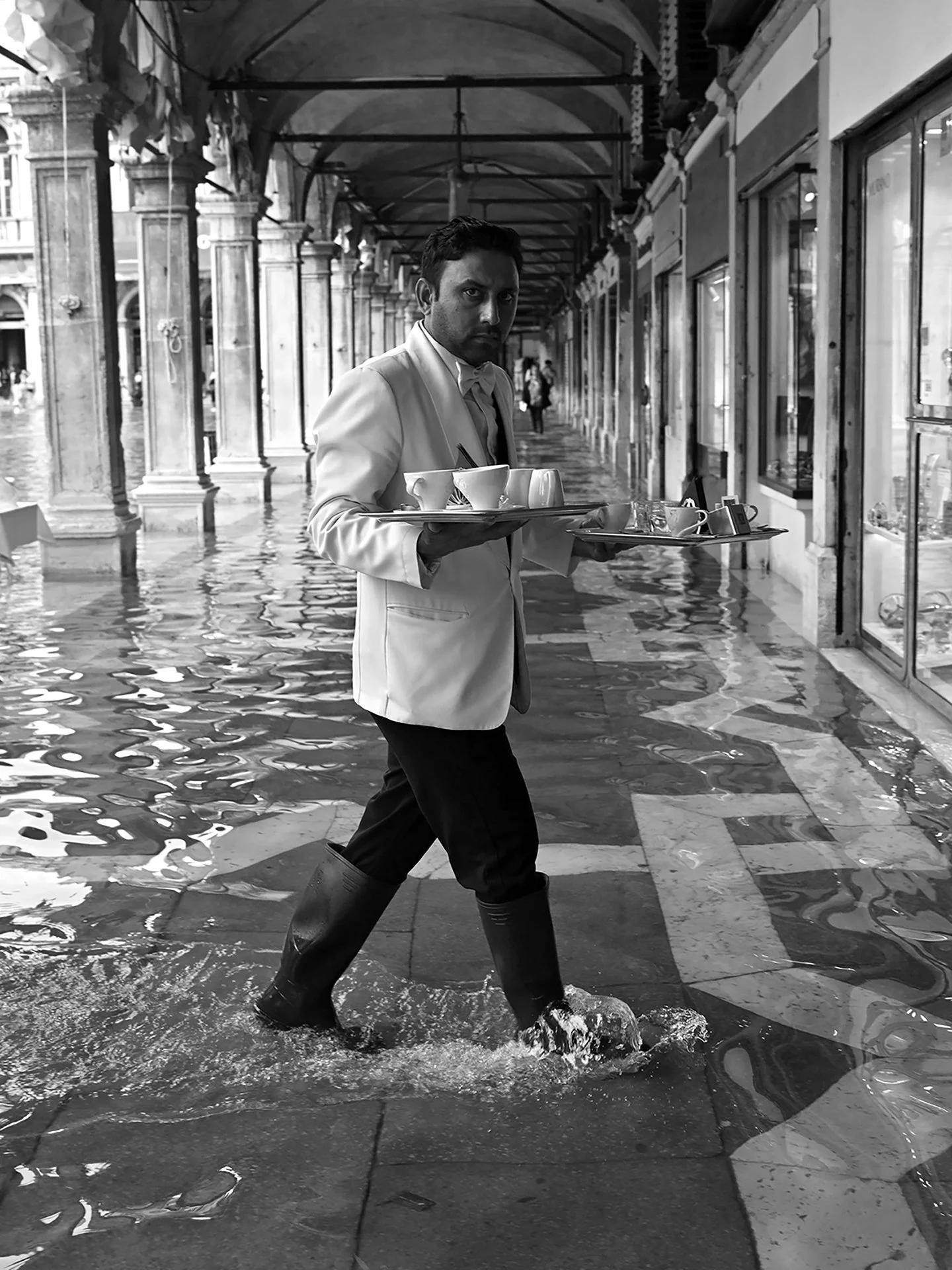
Venicescape: Acqua Alta
Acqua alta, or “high water,” is the periodic flooding that affects low-lying parts of Venice. It occurs when the regular astronomical tide combines with weather conditions such as low pressure and strong winds, which can push water into the lagoon. Because the city’s streets and squares sit at different heights, the water reaches some places before others. For Venetians, it is a recurring condition of urban life, though its extent and duration vary.
When the tide rises, familiar streets and squares take on a different character. Water covers paving stones, reflects façades, and gathers around steps and doorways. Residents and visitors adjust their routes, sometimes using raised walkways where they are available. The city continues to function, but movement through it becomes more deliberate, shaped by the changing boundary between dry ground and water.
This series follows how high water alters the experience of Venice. Reflections bring buildings and streets into the water’s surface, while detours and pauses reveal the ways people move through shared spaces. As the tide falls, these places return to their usual use. The photographs hold on to the interval in which the lagoon enters the city and makes its everyday structure newly visible.