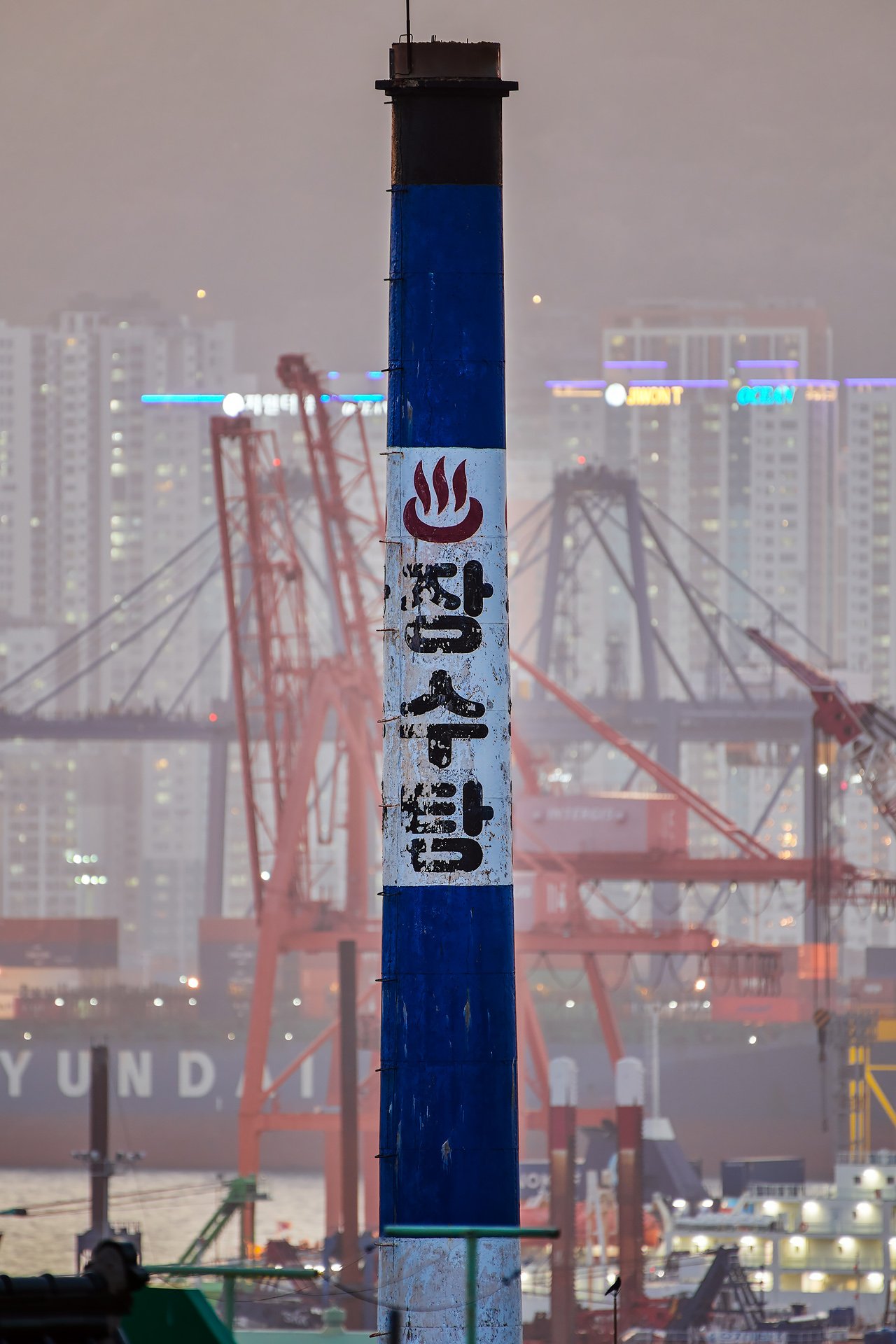
Fossils in the Sky
Busan is a city pressed between the mountains and the sea, with little flat ground to spare. After the outbreak of the Korean War, refugees arrived in enormous numbers, and the city’s population grew far beyond what its narrow streets and limited open land could hold. People built homes wherever they could find a foothold, climbing the steep slopes and filling them with houses. The hillside neighborhoods that came to define so much of Busan began to take shape under the pressure of displacement.
Water was scarce in many of these settlements, and bathing at home was often impossible. Public bathhouses became part of everyday life. On the steep, densely built slopes, their chimneys had to rise high above the surrounding houses so smoke would not spill into the neighborhoods below. For a time, these tall structures stood out across the city, marking a skyline shaped by the needs of a population displaced by war.
Today, cleaner fuels have left many chimneys without a purpose. Some remain because they are costly to remove, standing among newer buildings and high-rise apartments that rise far above them. I photograph these remnants as fossils in the city’s changing skyline: traces of the lives and settlements formed in the aftermath of war, still linking Busan’s past to its present.